A good fitness app can make it easier to decide what to do, keep track of your progress and stay motivated when life gets busy. But with so many options, how do you choose one that actually fits you?
Start with what you need, not the longest feature list. The right app should make your next step feel clearer, more manageable and easy to repeat.
Start with your goal
Before comparing apps, get specific about what you want help with. Your goal might be to build strength, move more, improve fitness, lose weight or find a routine you can stick to.
Then think about what support would make that goal feel achievable:
- A workout plan you can follow at home or in the gym
- Guidance for using the equipment you have
- Meal ideas that fit your preferences
- Reminders and progress tracking
- A way to adapt your plan when your schedule or ability changes
- Extra support for a recurring niggle or return to exercise
You don’t need a perfect plan before you begin. You need a practical one that suits your starting point and can grow with you.

Look for a plan that fits your real life
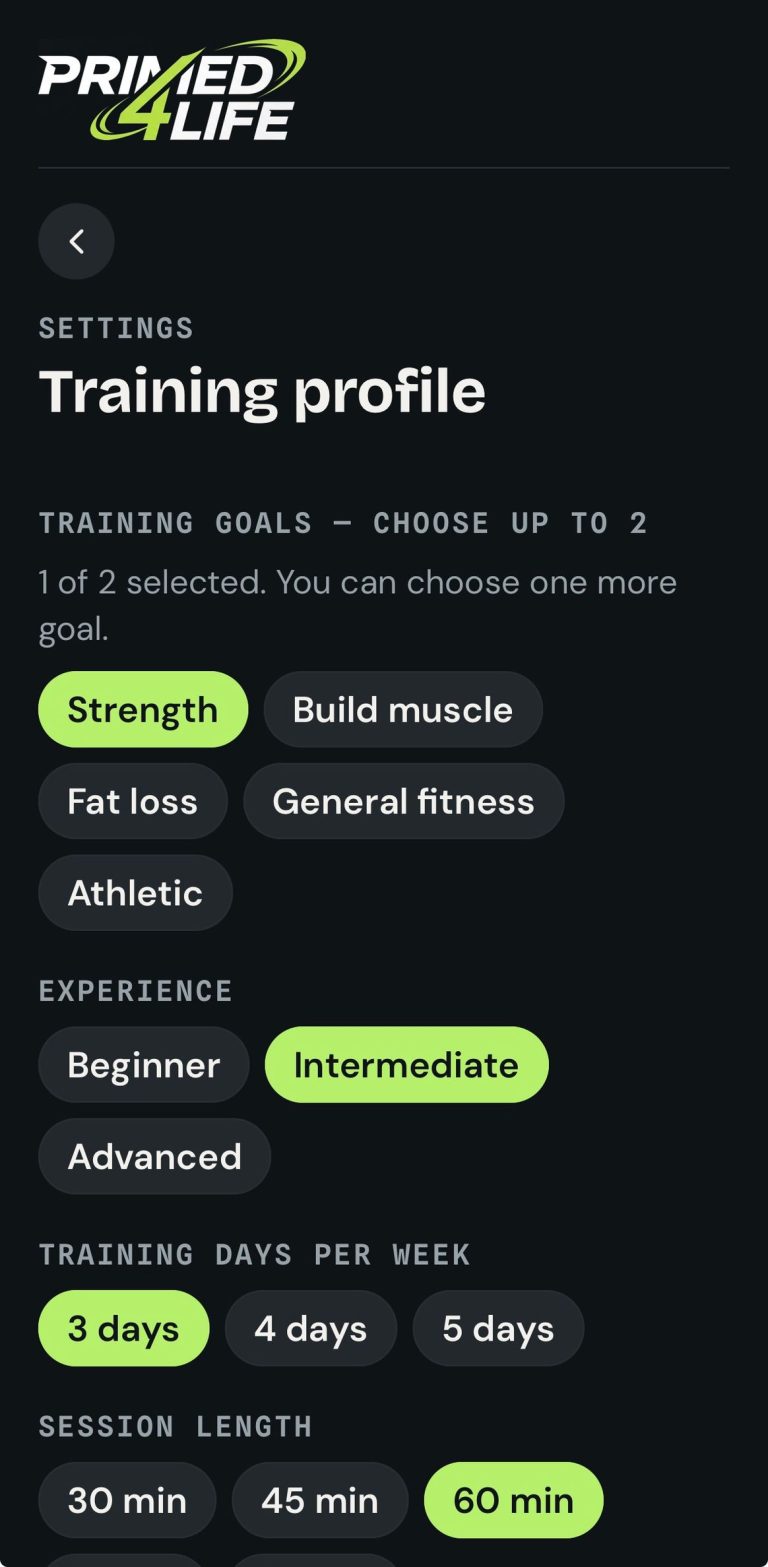
A plan only works if it can fit into your week. Check whether the app asks about your experience, available time, training days and equipment. If it gives everyone the same routine, it may not be the best match for you.
Useful workout features include:
- Clear exercises, sets, reps and rest periods
- Demonstration videos or simple technique guidance
- Options for different ability levels
- Exercise swaps for limited equipment
- A way to track sessions and see progression
- Rest and recovery built into the plan
The NHS physical activity guidelines for adults recommend that adults aim for at least 150 minutes of moderate activity or 75 minutes of vigorous activity each week, alongside strength-building activities on at least two days. These are general guidelines, not a pass-or-fail test. If you’re currently doing little activity, starting small and building gradually can be a more realistic way forward.
Check how the app personalises your training
Personalisation should mean more than entering your name and choosing a goal. Ask whether the app takes account of your training history, schedule, equipment and feedback, and whether it can suggest sensible adjustments.
Life changes. You might miss a session, travel, feel tired or find an exercise uncomfortable. A useful app should help you make a manageable change rather than leave you feeling that the whole plan has fallen apart.
If you have an injury, ongoing pain or a medical condition, take extra care. Look for clear guidance about modifying activity, and don’t rely on an app to diagnose or treat an injury. Stop if exercise causes sharp pain, and seek advice from an appropriate health professional. For more significant or persistent symptoms, get professional guidance before continuing.

Choose food support that feels sustainable
Nutrition features can be helpful when they make everyday choices simpler. Look for useful, practical tools such as recipes, meal ideas, shopping lists and ways to note your preferences or allergies.
Be cautious of apps that promise rapid results, treat foods as “good” or “bad”, or make strict targets feel like the only measure of success. A sustainable approach should work with your life, not make every meal feel like a test.
The NHS Eatwell Guide is a helpful starting point for general healthy eating. If you’re pregnant, have a health condition, have a history of disordered eating or need a medically tailored diet, ask a qualified professional for advice rather than relying on generic app recommendations.
Make progress easy to understand
Tracking can help you spot what’s working, but more data doesn’t always mean more progress. Choose an app that shows information you can use, such as completed workouts, changes in strength, consistency and how you’re feeling.
Look for check-ins that are quick and clear. Useful feedback should help answer practical questions:
- What’s going well?
- What might need adjusting?
- What’s one realistic next step?
Weight may be one useful measure for some goals, but it isn’t the only one. Energy, confidence, mobility, strength and how consistently you’re moving can matter too. Choose an app that supports progress without making you feel judged.
Don’t overlook privacy and accessibility
Fitness apps may ask for personal information, so take a moment to read the privacy notice before signing up. Check what data the app collects, why it needs it, whether it’s shared, and how to manage or delete your account information.
Also consider whether the app works for you day to day:
- Can you read and understand the instructions?
- Are videos captioned or easy to follow?
- Can you use it with your phone or wearable?
- Is the price clear, including any trial and renewal terms?
- Can you cancel without hassle?
The UK government’s criteria for health app assessment offer more pointers on transparency, consent and data sharing.
Compare the features that matter to you
A long list of tools can look impressive, but the best app is the one you’ll actually use. Give each option a quick score from 0 to 2 for:
- Fit with your goal
- Personalised workout planning
- Helpful coaching and progress tracking
- Nutrition support, if you want it
- Adaptability to your equipment and schedule
- Clear privacy and pricing information
Reject any app that makes claims you don’t trust or leaves you unsure how to exercise safely. Then try your strongest option for a couple of weeks. Are the instructions clear? Does the plan fit your routine? Do you feel supported rather than overwhelmed?

Think about the support you want
Some people want a simple tracker. Others want a structured training plan, meal guidance and regular feedback in one place. If you’re unsure, decide what would remove the biggest barrier for you right now.
For example, if you don’t know where to start, a clear beginner plan may help. If you’ve lost momentum, progress tracking and weekly check-ins might be more useful. If you train around a niggle, look for sensible exercise alternatives, and involve a physio or other qualified professional when needed.
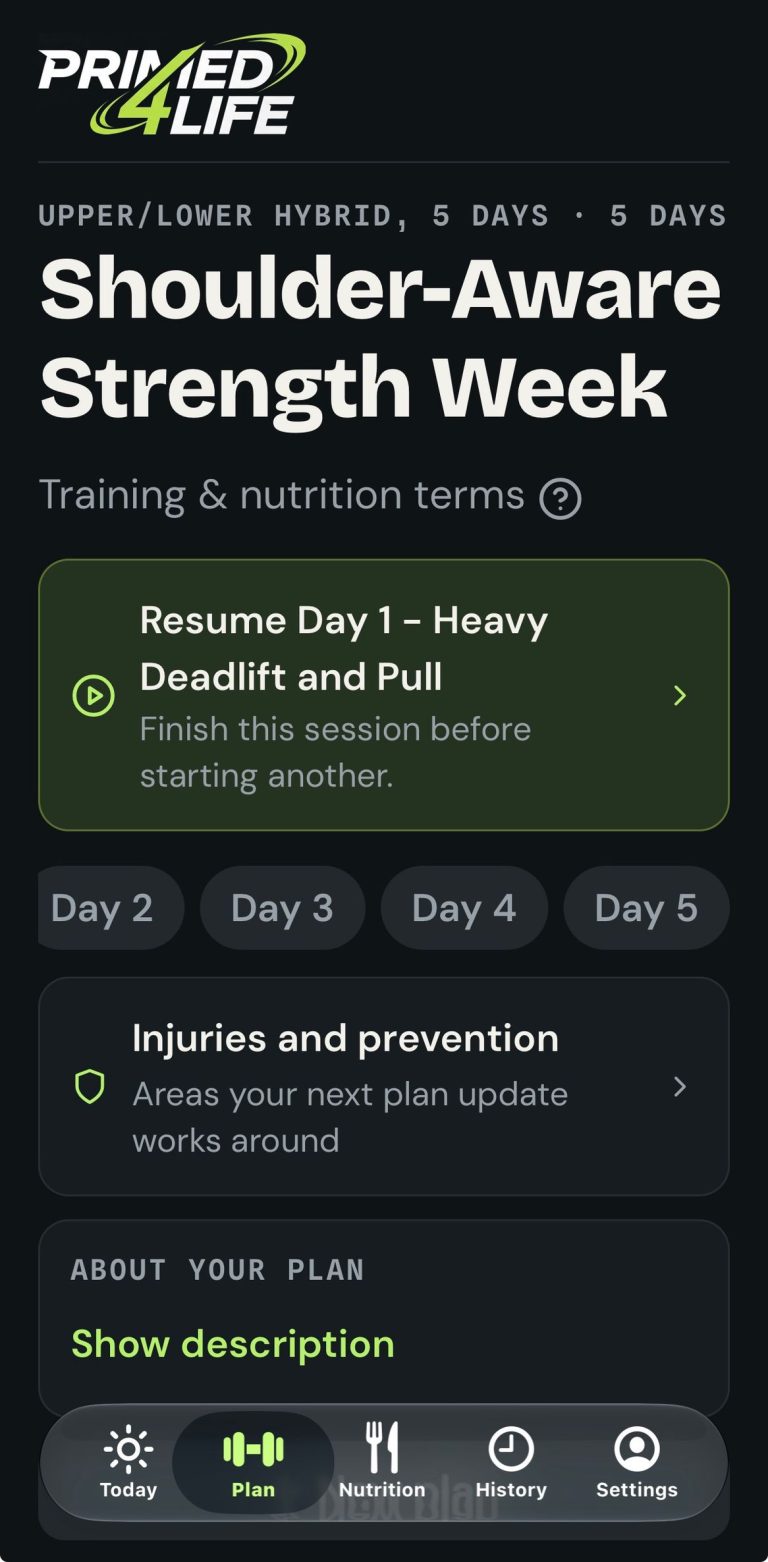
Primed4Life brings training and nutrition planning together in one app. You can share your goals, experience, equipment, training days and dietary preferences to get plans shaped around your needs. The app includes exercise demonstrations, meal ideas and weekly check-ins, with options to adjust your plan. It isn’t a substitute for medical care, and you should seek professional advice for injuries or health concerns.
Your first training and nutrition plans are free. Get started with Primed4Life and see whether it feels like the right fit for you.
Take the first step
Choosing a fitness app doesn’t have to be complicated. Start with your goal, check that the plan fits your routine, and look for support that feels clear, flexible and safe.
The right app won’t do the work for you. It can make it easier to begin, and easier to keep going.
Your first plan is free
Get a training plan and 7-day nutrition plan built around your goals, equipment and any injuries.