
January can make a fresh start feel easy. Your diary is open, your trainers are by the door and you’re ready to change everything at once.
Then work gets busy. You miss a session. The plan that looked exciting suddenly feels like another thing you’re failing to keep up with.
If that sounds familiar, you’re not alone, and it doesn’t mean you lack willpower. Often, the plan simply asks too much of your time, energy or body. The answer isn’t to try harder. It’s to build a routine that can flex when real life does.
First, February isn’t a deadline
The idea that everyone gives up on fitness by February is catchy, but it isn’t a universal rule. People’s routines vary, and one missed workout, or one quieter week, doesn’t mean you’ve failed.
Still, the first few weeks can be a useful test. In the STRRIDE exercise trials, many dropouts happened before or during the gradual build-up to the full programme. That’s a reminder to start at a level you can manage, rather than treating your first week as a fitness test.
A new routine takes more than motivation. It needs to fit your schedule, suit your current ability and feel worth returning to.
Why good intentions lose momentum
You start with too much
Five workouts a week, a strict meal plan and an early alarm can feel exciting in theory. In practice, it may leave little room for work, family, rest or the occasional change of plan.
If your first week depends on everything going perfectly, it’s probably too ambitious.
Your routine has no place in your diary
“I’ll exercise when I have time” sounds flexible, but it can leave you waiting for a gap that never appears. Choosing a day, time and place makes it easier to know when you’ll move, and to plan around it.
The plan doesn’t feel like yours
A generic programme may expect different equipment, more experience or more training days than you have. It might also overlook an injury or a recurring niggle. When the plan feels uncomfortable or out of reach, staying consistent becomes harder.
If pain is affecting your training, read our guide to training safely at home with niggles. An app can help adapt exercise choices, but it can’t diagnose an injury or replace advice from a qualified healthcare professional.

One missed session becomes a reason to stop
A busy week is normal. But if missing Tuesday’s workout makes you feel the whole plan is ruined, it’s easy to miss the next one too.
Treat a missed session as information, not a verdict. What got in the way? Could you move the workout, shorten it or choose a home version next time?
Build a plan you can return to
Start smaller than your ambition
For the first month, choose an amount of training you can picture doing during an ordinary, slightly busy week, not just an ideal one.
That could mean:
- Two manageable strength sessions each week
- A short walk on another day, if it suits you
- A few minutes of mobility as a warm-up or on a rest day
These are examples, not a test. If you’re new to exercise or have a health concern, start at a level that feels appropriate for you and ask a qualified professional for guidance when needed. The NHS activity guidelines for adults offer a longer-term direction; you don’t have to reach the full recommendation in your first week.
Put your sessions in the diary
Choose a regular day, time and place. For example: “I’ll do my strength session at home on Tuesday after work.”
Then create a backup: “If Tuesday doesn’t work, I’ll do a shorter session on Thursday.” A small, specific plan is easier to act on than a vague promise to get fitter.

Decide on your minimum version
Some days, your planned workout won’t fit. Decide in advance what a shorter version looks like: perhaps 10 minutes of movement, a walk around the block or one round of a few exercises.
A shorter session isn’t the same as your full programme, and it doesn’t need to be. It gives you a practical way to keep your routine alive on a difficult day. If you’re unwell or an exercise causes pain, rest or seek appropriate advice instead.
Pick movement you don’t dread
You’re more likely to return to an activity that suits your preferences and abilities. Try different ways to move: strength training at home, a gym session, walking, cycling or a class.
You don’t need to love every workout. But the plan should feel possible, and ideally include something you enjoy.
Make food practical too
A fitness routine can lose its appeal if your food plan is too strict, expensive or time-consuming. Aim for everyday meals that fit your tastes, schedule and budget. Planning a few simple lunches or dinners can be more useful than trying to perfect every meal.
If you want ideas for making nutrition feel more manageable, take a look at our guide to fibre and everyday nutrition. If you have a medical condition, allergies or a history of disordered eating, seek individual advice from an appropriate healthcare professional.

Measure more than motivation
Motivation changes from day to day, so it’s not the only way to judge whether your plan is working. You could keep a simple record of:
- Sessions completed
- Exercises that feel more comfortable or stronger
- Energy, mood and sleep
- How well the routine fits your week
Weight and progress photos can be useful for some people, but they aren’t required. Choose measures that support you, not ones that make you feel worse.
A weekly check-in can help you spot patterns: perhaps late meetings get in the way, or you feel more tired after a particular session. The point is not to criticise yourself. It’s to decide what might make next week more workable.
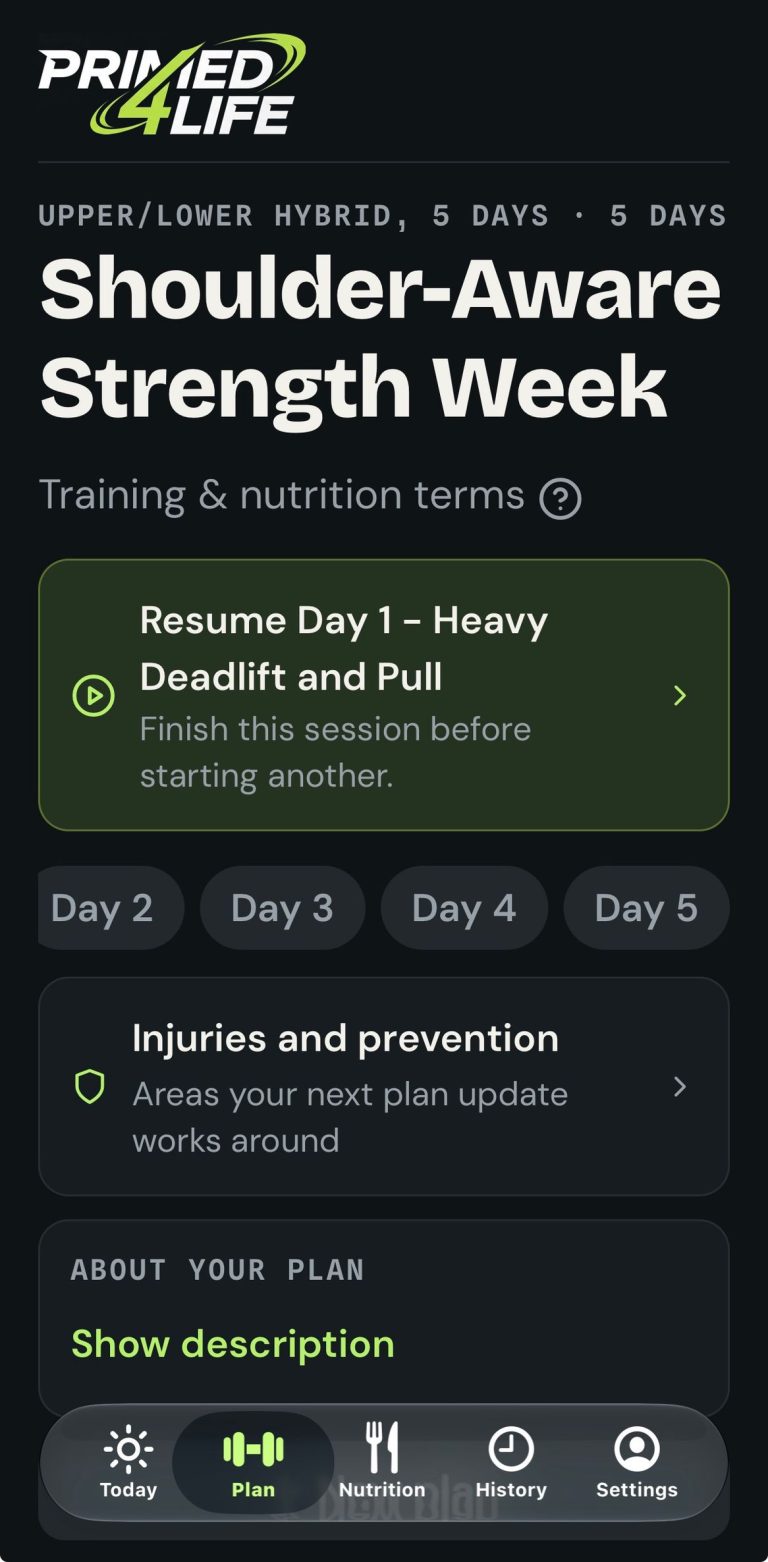
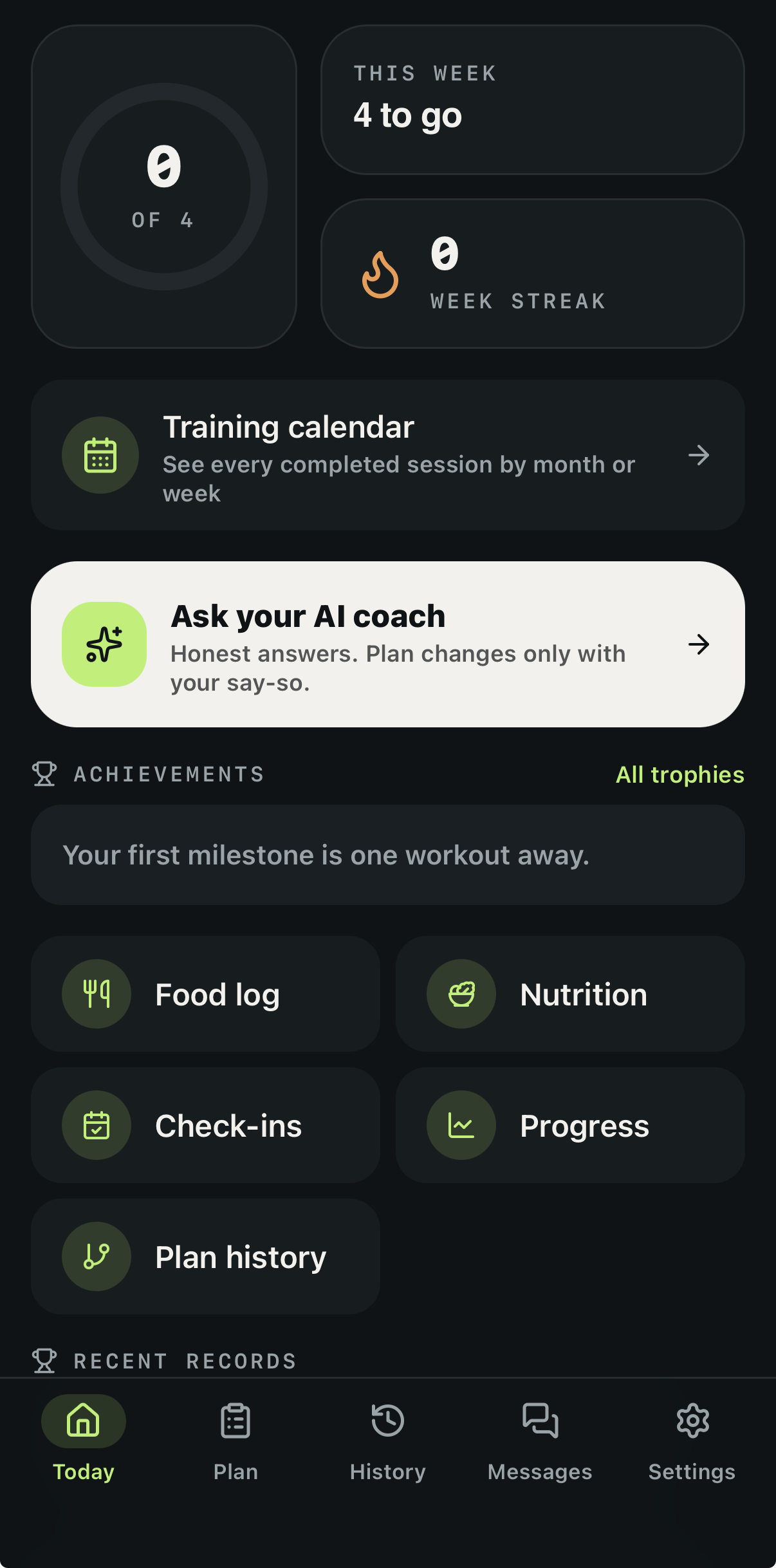
Primed4Life is designed around this kind of review. Its AI-led app considers your training and food logs alongside your weekly check-in (including weight, photos, mood, sleep and motivation) to give feedback on what’s working and what may need attention. You choose whether to generate an adjusted plan or keep your current one. Nothing changes without your approval.
Make room for your body to adapt
Progress doesn’t mean pushing through pain. If an exercise feels uncomfortable, stop and consider whether a suitable alternative is available. Primed4Life can build training around the equipment and injury information you provide, and suggest exercise adjustments based on your feedback. That is not a physiotherapy assessment or treatment.
For new, persistent or worrying pain, speak to a GP or qualified physiotherapist. The aim is a routine you can maintain for the long term, not a hard January push that leaves you worse off.
Use support that fits your life
The best support is the kind you’ll use. That might be a friend to walk with, a coach, a clear plan, or a fitness app that helps you stay organised.
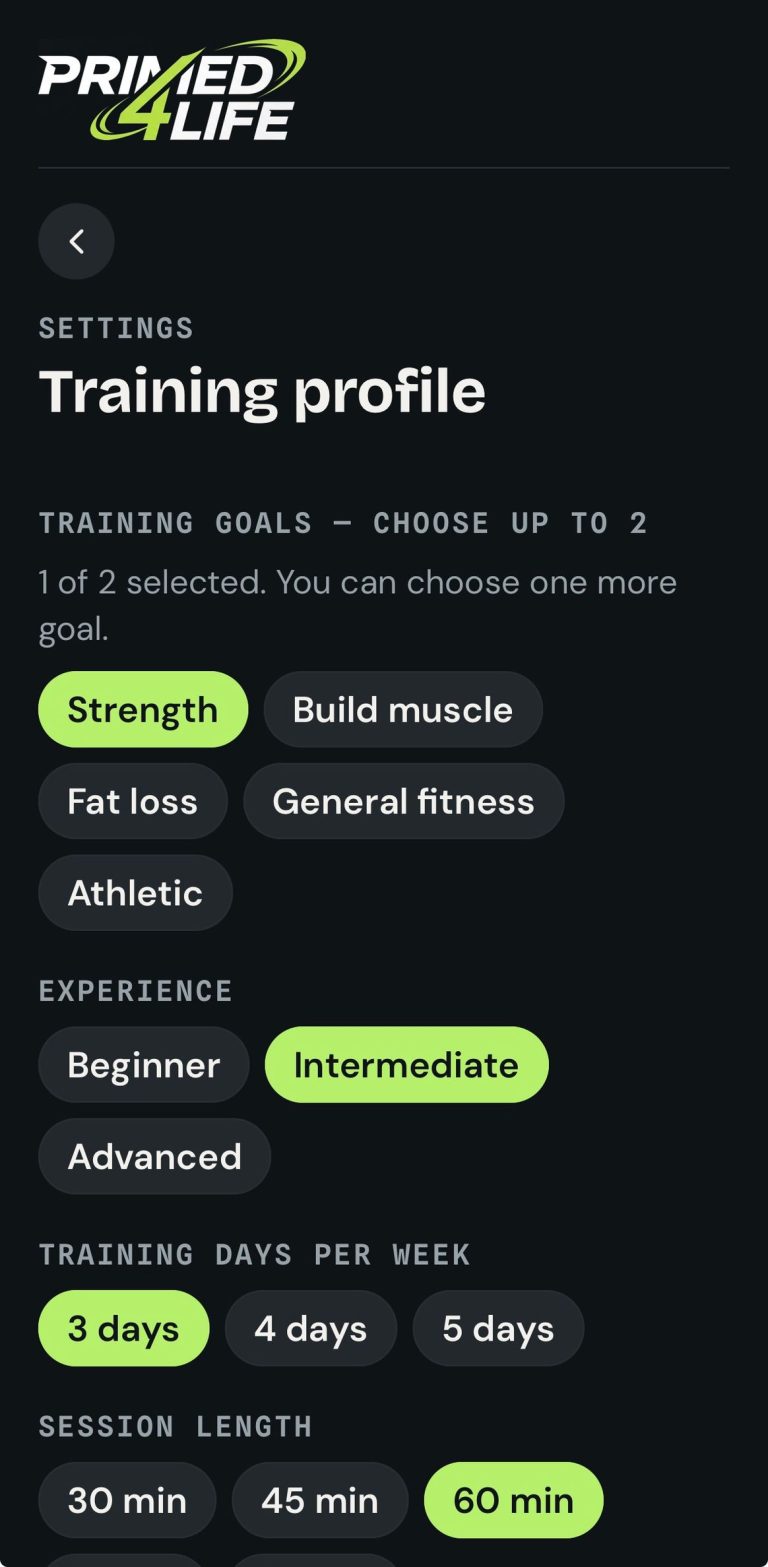
Primed4Life brings training and nutrition planning together in one app, with exercise options shaped around your goals, experience, equipment and schedule. The AI specialist is available to answer questions about your plan, and you can upgrade to one-to-one support from a human coach if you’d like it. It’s designed as an accessible alternative to paying separately for planning and ongoing guidance, not a replacement for a physio or other healthcare professional.
Your first training and nutrition plans are free. Build your free Primed4Life plan and see what a routine built around you could look like.
Let February be a check-in, not a finish line
If your January plan has started to slip, you don’t need to wait for next year, or start over from scratch.
Make the routine smaller. Put it in your diary. Create a backup for busy days. And if something isn’t working, change the plan rather than blaming yourself.
The aim isn’t a perfect month. It’s a useful routine you can keep returning to, one week at a time.
Your first plan is free
Get a training plan and 7-day nutrition plan built around your goals, equipment and any injuries.