
A niggle can make a simple workout feel complicated. Should you carry on, change the exercise or take a break?
There isn’t one answer that suits every ache. But you can make a calmer, more informed choice than pushing through a random workout and hoping for the best. The aim is to keep moving where it feels manageable, adjust what doesn’t, and get professional advice when you need it.
This guide offers general information, not a diagnosis or individual treatment plan.
First, pay attention to the pattern
Before you train, take a moment to notice what’s going on. Where do you feel discomfort? Does it appear during a particular movement, or is it there at rest too? Has it changed recently? Is there swelling, bruising or a loss of movement?
You don’t need to work out the cause yourself. You’re simply gathering clues that can help you decide whether to modify your session or seek advice.
A useful check-in might include:
- What movement brings on the symptom?
- Does it ease, stay the same or get worse as you move?
- Are you changing your normal movement to avoid it?
- How do you feel later that day and the next morning?
If pain is sudden, sharp or getting worse, stop the movement that brings it on. Don’t repeatedly test it to see whether it still hurts. And if a symptom keeps returning, affects everyday activities or concerns you, speak to a healthcare professional.
Use a simple traffic-light check
Think of this as a practical way to guide your choices, not a medical test.
Green: comfortable and in control
You feel no pain, or only mild discomfort that doesn’t worsen or change how you move. You may be able to continue, but keep the effort sensible and pay attention to how you feel afterwards.
Amber: noticeable or lingering
The movement feels uncomfortable, your technique starts to change, or symptoms linger after the session. Try making the exercise easier: use less resistance, reduce the range, do fewer repetitions or choose a different movement.
Check how you feel later and the next morning. If you’re worse, that’s useful information: the session may have been too much for you right now.
Red: stop and get help
Stop the exercise if you feel sharp or increasing pain, sudden weakness, significant swelling, instability, numbness or tingling. Get medical advice if symptoms are severe, keep worsening or don’t settle.
The NHS sprains and strains guidance explains when to seek urgent help. For example, a joint that looks misshapen, becomes numb, tingles or changes colour needs urgent attention.
Adjust the exercise, not your movement
A common mistake is to keep doing the same exercise while subtly shifting, twisting or holding your breath to avoid discomfort. That can make it harder to move well and can turn a useful session into a frustrating one.
Instead, try changing one thing at a time:
- Reduce the resistance. Use lighter dumbbells or a lighter band.
- Shorten the movement. Work through a smaller, comfortable range.
- Do less. Try fewer repetitions or sets, or take longer rests.
- Slow down. Use controlled repetitions rather than rushing.
- Add support. Hold a stable surface or choose a more supported position.
- Swap the movement. Choose another exercise that trains a similar area without provoking the same symptoms.
For example, if a squat feels uncomfortable, you might try sitting down to a chair and standing back up through a range that feels manageable. If a floor push-up doesn’t feel right, you could try a wall push-up instead. These are examples, not prescriptions: choose only what feels suitable for you, and stop if symptoms worsen.

You can also train a different area if that feels comfortable. A niggle in one part of your body doesn’t automatically mean every kind of movement is off limits. But don’t use other exercises to compensate for pain or force your way through a workout.
Warm up gently, then reassess
A warm-up can help you ease into movement, but it shouldn’t be used to mask pain or prove you can push through it.
Start with a few minutes of easy movement, then practise the movements you plan to do with no weight or very light resistance. Keep everything controlled and comfortable. For a home strength session, that could mean shoulder circles, gentle hip hinges or a few easy repetitions of the exercise you intend to perform.
If symptoms settle and your movement stays comfortable, you may be able to continue with a modified session. If they become sharper, more noticeable or change the way you move, switch to something more comfortable or stop.
Mobility work follows the same principle. It should feel controlled, not forced. You don’t need to stretch hard or chase a particular range of motion. If a stretch brings on sharp pain, tingling or a strong pulling feeling, ease out of it.

Make your next session easier to judge
When you’re training around a niggle, keeping a simple note can help you spot patterns. You could record the exercise, the version you tried, how it felt during the session and how you felt later or the next morning.
That way, you’re not relying on memory or making a big change based on one moment. You can see whether a particular range, resistance or amount of training seems to suit you better.
When things are improving, build back gradually. Increase just one part of the session at a time (such as the repetitions, resistance or range) and give yourself a chance to see how you respond. Avoid jumping straight from a few comfortable movements to a demanding workout.
There’s no universal timetable for returning to exercise. An appropriate pace depends on the issue and the person. If you’re unsure, symptoms keep flaring up, or you’re returning after a significant injury, a physiotherapist or another relevant healthcare professional can help you decide what’s appropriate. NHS Inform’s advice on soft tissue injuries also recommends adapting activity to your symptoms and building back as you improve.
When a niggle needs more than a workout tweak
An app or general guide can’t tell you what’s causing pain. Get professional advice if symptoms keep returning, are getting worse, affect normal daily life or aren’t improving as you’d expect.
Seek urgent medical help for severe pain, major swelling, a visible change in the shape of a joint or body part, numbness, tingling or a limb that becomes unusually cold or changes colour. If you’re not sure how urgent it is, contact NHS 111; for an emergency, call 999.
If you’re weighing up what kind of support might help, read our guide to whether you really need a personal trainer, physio and nutritionist. A training plan can provide structure, but pain that needs assessment belongs with an appropriate healthcare professional.
Make home training feel more considered
Training at home gives you freedom: you can choose your space, your equipment and a pace that suits your day. A niggle doesn’t have to mean guessing your way through random online workouts. It’s a reason to be more thoughtful about what you do, how it feels and when to ask for help.
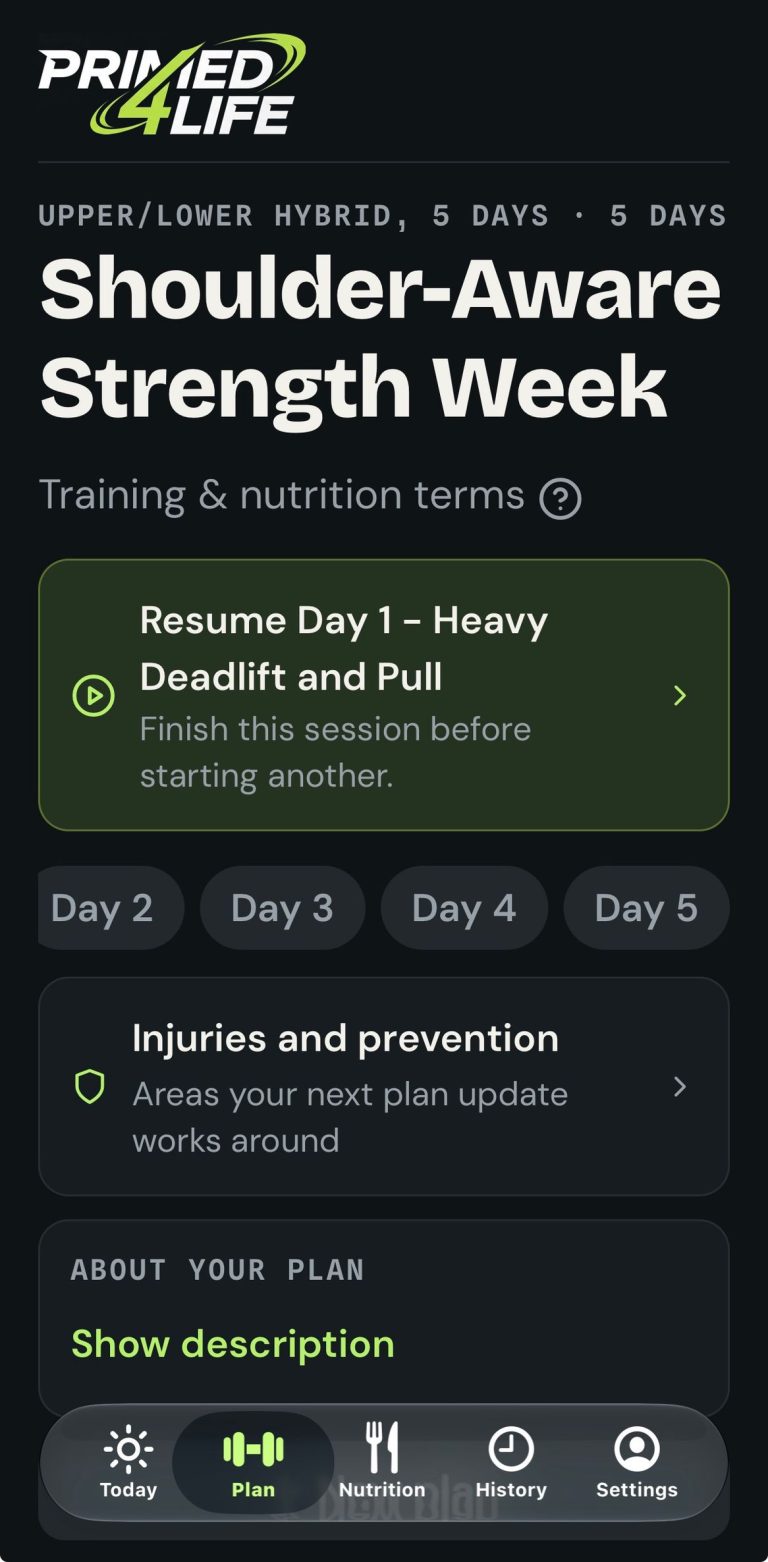
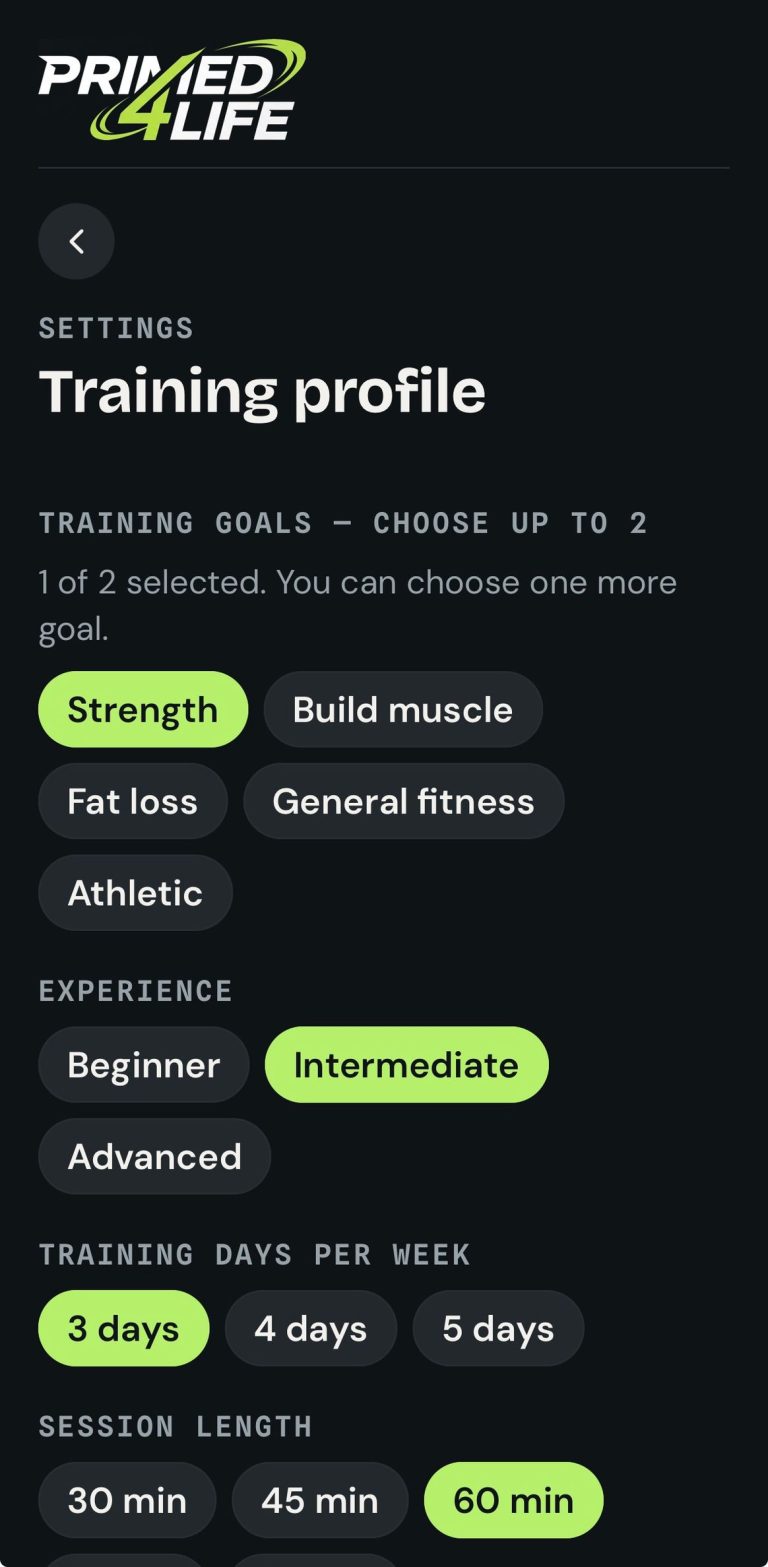
Primed4Life builds training plans around your goals, experience, available equipment and stated needs. The app includes pain-free exercise regressions, smart exercise swaps, and prehab and mobility work in every session. If something hurts mid-set, you can flag it so your plan can adapt.
That support can help you make sensible adjustments, but it isn’t a substitute for medical care, a diagnosis or treatment from a qualified professional. If pain is sharp, worsening, persistent or worrying, stop and seek appropriate advice.
Ready for a plan that takes your needs into account? Create a free Primed4Life account and see what your first training plan looks like.

Your first plan is free
Get a training plan and 7-day nutrition plan built around your goals, equipment and any injuries.