You don’t need a gym full of machines to start building strength. A sturdy chair, a backpack and a little floor space can be enough to begin.
The best beginner plan is one you can do safely, repeat regularly and adapt as you get stronger. Here’s a simple home routine to help you get going.
Start with what you have
Before you plan a workout, take stock of your space and equipment. You might have dumbbells at home, or you might have nothing beyond a chair and a backpack. Either way, you can choose exercises that suit your starting point.
For this guide, you’ll need:
- A clear, non-slip space
- A sturdy chair or kitchen counter
- A backpack you can pack securely
- Books or sealed water bottles to add weight, if you have them
- Comfortable clothes and enough room to move
Check that chairs, counters and bags are stable before using them. Keep the floor clear, and don’t use furniture that slides or tips.
How often should you train?
A good starting point is two full-body sessions a week, with at least a day between them. For example, train on Monday and Thursday. This gives you time to practise the movements and recover between sessions.
If that feels manageable after a few weeks, you can consider adding another session or choosing a different weekly split. There’s no prize for doing more before you’re ready. Consistency matters more than starting with a packed schedule.
Your two-day beginner plan
Begin each session with five minutes of easy movement, such as marching on the spot, gentle step-ups or arm circles. Then practise the first exercise with a comfortable range of motion before starting your sets.
For the first couple of weeks, do one or two sets of each exercise. Aim for the listed repetitions while keeping good control. Rest for around one to two minutes between sets, or longer if you need it to feel ready for the next one.

Workout A
-
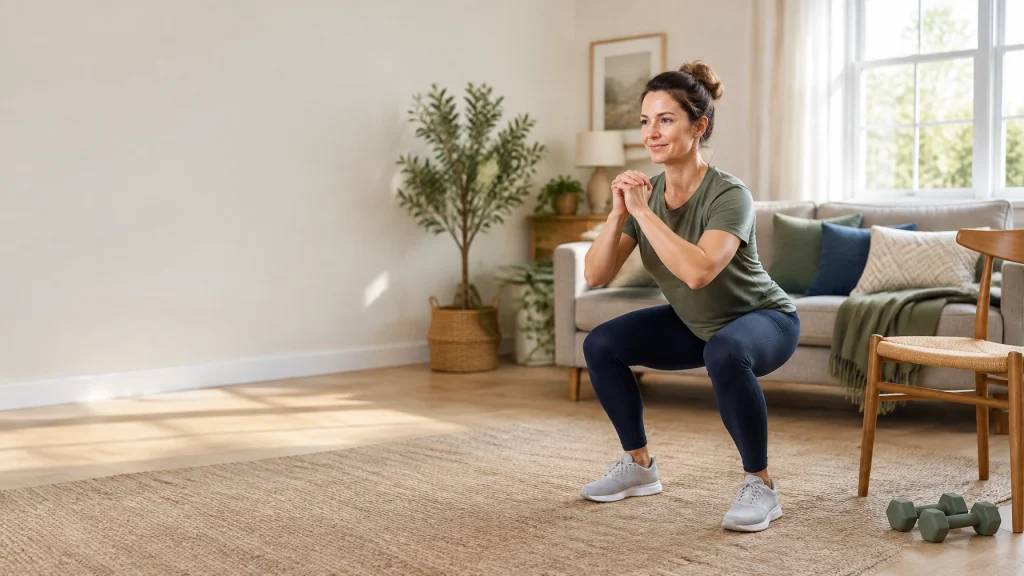
Chair squat: 8–12 reps
Sit back towards the chair, then stand up steadily. Use your hands for support if needed. As it gets easier, tap the chair without sitting fully, or hold a lightly packed backpack. -
Incline push-up: 6–12 reps
Place your hands on a wall or a stable counter. Keep your body in a straight line as you lower your chest towards your hands and press back. A higher surface makes the exercise easier. -
Backpack row: 8–12 reps per side
Hold a securely packed backpack in one hand. Support yourself with the other hand on a sturdy surface, hinge slightly at the hips, then draw your elbow towards your side. Start with a light load. -
Glute bridge: 8–12 reps
Lie on your back with knees bent and feet flat. Gently lift your hips, pause briefly, then lower with control. Stop if the movement causes pain. -
Dead bug: 6–10 reps per side
Lie on your back with knees bent. Keeping your middle steady, slowly reach one arm and the opposite leg away, then return and switch sides. Make the movement smaller if you find it difficult to stay in control.

Workout B
-
Supported split squat: 6–10 reps per side
Stand near a wall or sturdy chair for balance, with one foot slightly in front of the other. Bend both knees a little, then stand. Use a small, comfortable range at first. -
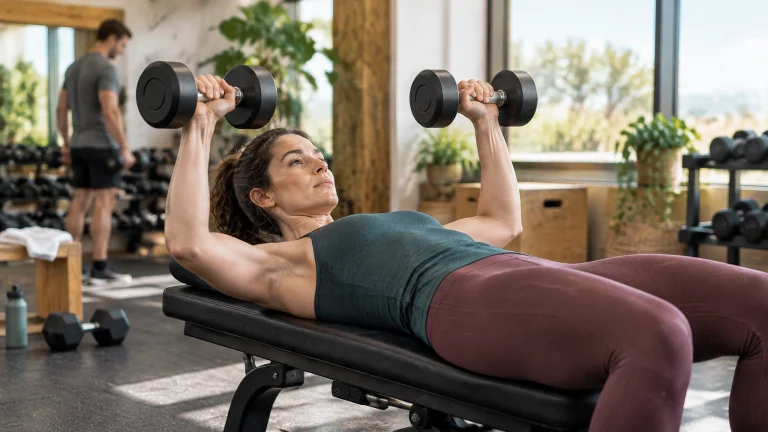
Floor press with water bottles: 8–12 reps
Lie on your back holding a light bottle in each hand. Start with your hands above your chest, lower your elbows towards the floor, then press up. If you don’t have bottles, repeat the incline push-up at a suitable height. -
Backpack hip hinge: 8–12 reps
Hold a light backpack close to your body. Soften your knees and push your hips back, keeping your back comfortable and controlled. Stand tall again. Begin without added weight if you’re learning the movement. -
Calf raise: 10–15 reps
Hold a stable support, rise onto your toes, pause, then lower slowly. Start with both feet on the floor. -
Bird dog: 6–10 reps per side
Start on hands and knees. Reach one arm forwards and the opposite leg back, keeping your trunk steady. Return and alternate sides. Use a smaller reach if you wobble.

Progress gradually
Strength training works by giving your body a challenge it can adapt to. That doesn’t mean every set needs to leave you exhausted. Start with a version you can do smoothly, and finish each set feeling you could manage a few more good repetitions.
When you can complete the top of the repetition range with control, make one small change:
- Add a repetition or two
- Add a set
- Use a slightly harder exercise variation
- Add a little weight to your backpack
- Improve your range of motion or control
For example, progress from a wall push-up to a counter push-up, then to a lower, stable surface if that suits you. For squats, begin with a chair and work towards standing without it. Change one thing at a time, and give yourself a chance to adjust.
Write down your exercises, repetitions and any added weight. It’s a simple way to notice progress, even when the changes feel small.
Make the plan fit your life
A plan is only useful if it works with your time, confidence and equipment. If two days feels realistic, start there. If you have dumbbells, use them where they suit you. If you don’t, bodyweight movements and carefully loaded household items can help you practise and build a routine.
If a movement feels uncomfortable, stop and try an easier version or a different exercise. Muscle effort is expected, but sharp pain is a reason to stop. For more guidance on modifying training around pain or recurring niggles, read our article on injury-aware home training. If you have an injury or health concern, consider getting advice from a qualified health professional before starting.
Keep the habit going
You don’t need a perfect week. If life gets busy, do one session and pick up your usual routine when you can. If you miss a workout, there’s no need to make up for it by cramming sessions together. Just return to the plan.
Food, sleep and recovery also support training. For practical ideas on everyday meals and fibre, explore our guide to fibre and fuelling your training for the long term.
Want a plan built around you?
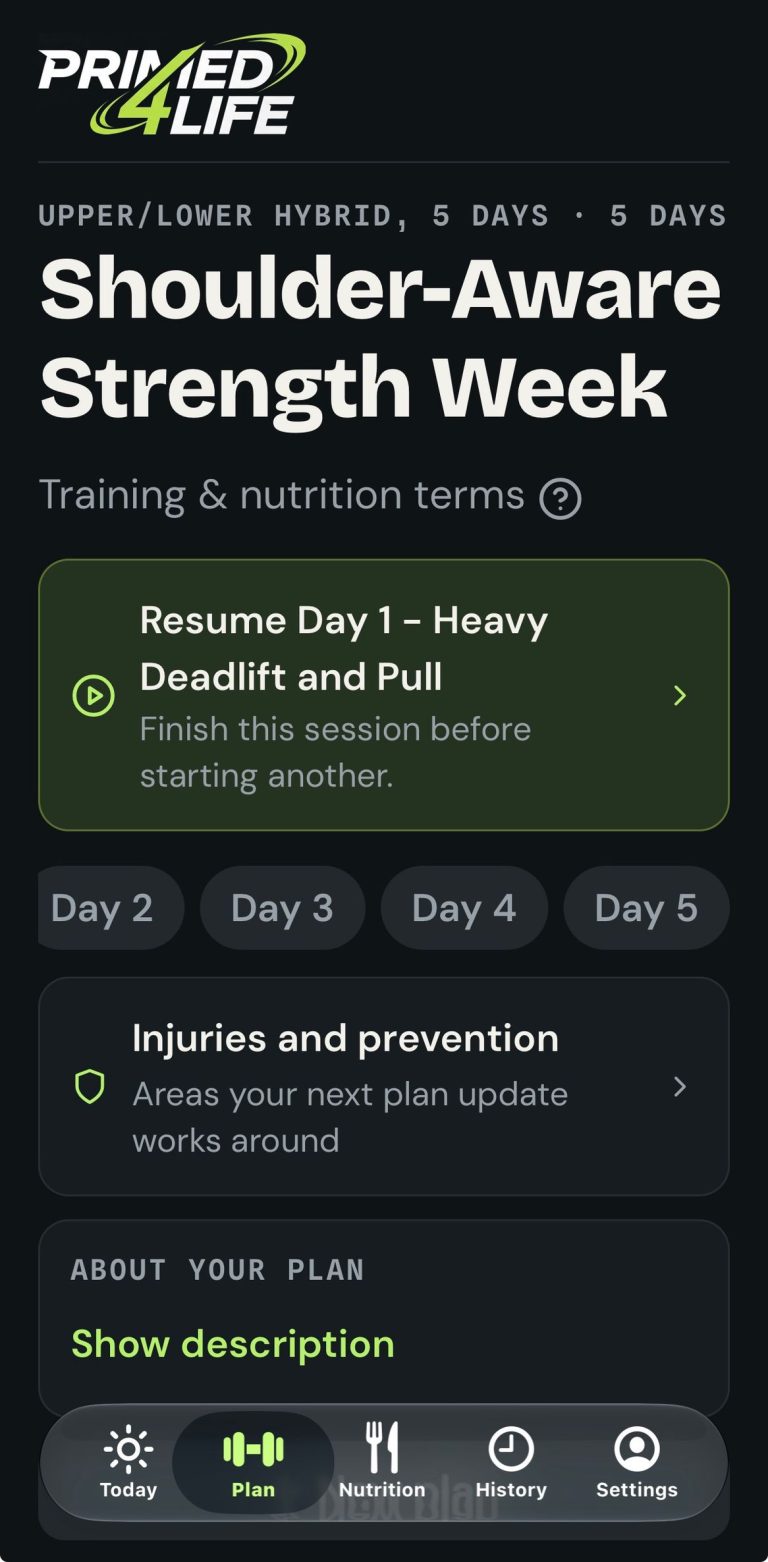
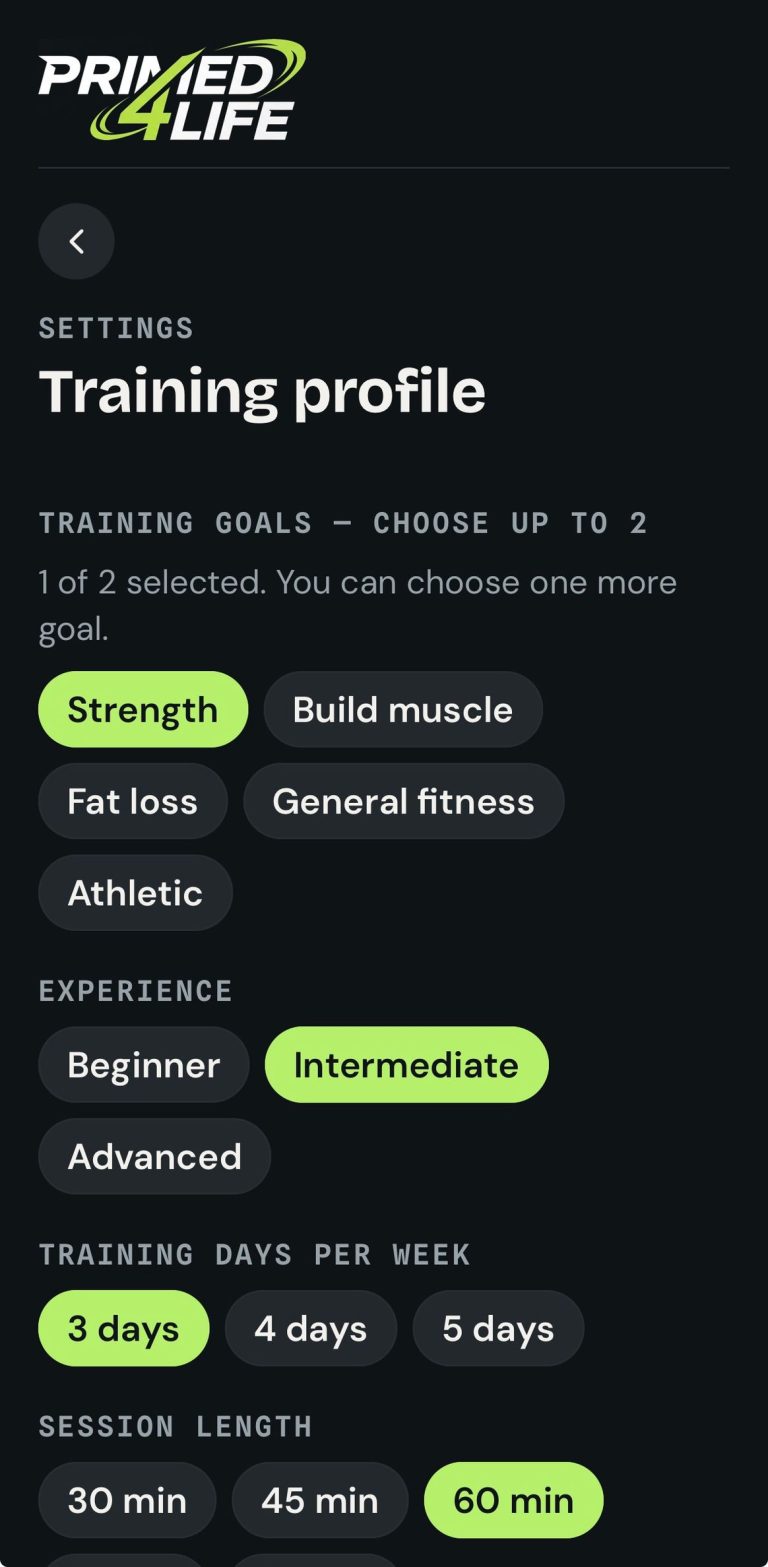
This guide is a starting point, not a template you have to follow forever. Primed4Life creates training plans around your goals, experience, available equipment and training days. Choose a three-, four- or five-day split, with exercises, sets, reps, rest periods and technique videos, then build on your progress over time.
The app is AI-led, with an AI specialist available to help with training, technique, food and recovery. If you’d prefer one-to-one support, you can upgrade to a human coach. You can start with your first training and nutrition plans free at app.primed4life.com.
No gym required. Just a starting point that works for you, and room to keep getting stronger for life.
Your first plan is free
Get a training plan and 7-day nutrition plan built around your goals, equipment and any injuries.